Weatherproofing your roof is a crucial step in safeguarding your home against the elements. As a trusted roofing contractor, Right Now Roofing understands that a well-maintained roof is not just a necessity but a vital investment in your property’s integrity and value. In this guide, we will walk you through the essential steps to weatherproof your roof effectively, ensuring it remains a secure and comfortable haven for years to come.
Why Weatherproofing Matters
Weatherproofing is more than just a maintenance task; it’s a proactive measure to prevent water damage, mold growth, and structural issues that can arise from neglecting your roof. Without proper weatherproofing, even minor leaks can escalate into major problems, affecting not only your home’s structure but also your health and safety2.
Steps to Weatherproof Your Roof
1. Inspect Your Roof Thoroughly
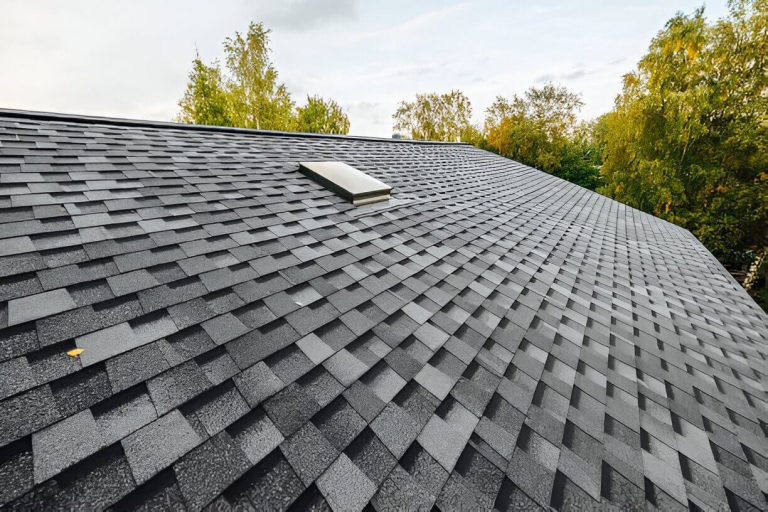
Before applying any weatherproofing solutions, it’s essential to inspect your roof for any signs of damage or wear. Use a ladder, flashlight, and binoculars to check for:
- Damaged or missing shingles
- Clogged gutters and downspouts
- Loose or missing flashing
- Existing leaks or water stains
Addressing these issues early on ensures that your weatherproofing efforts are effective and long-lasting. For more detailed inspection tips, visit our Roof Inspections page.
2. Clean the Roof Surface
A clean roof is essential for any weatherproofing solution to adhere properly. Use a broom or blower to remove debris, and consider using a biodegradable cleaner to eliminate moss or algae. Don’t forget to check and clean your gutter system to prevent water overflow.
3. Repair Existing Damage
After cleaning, repair any damage you’ve identified:
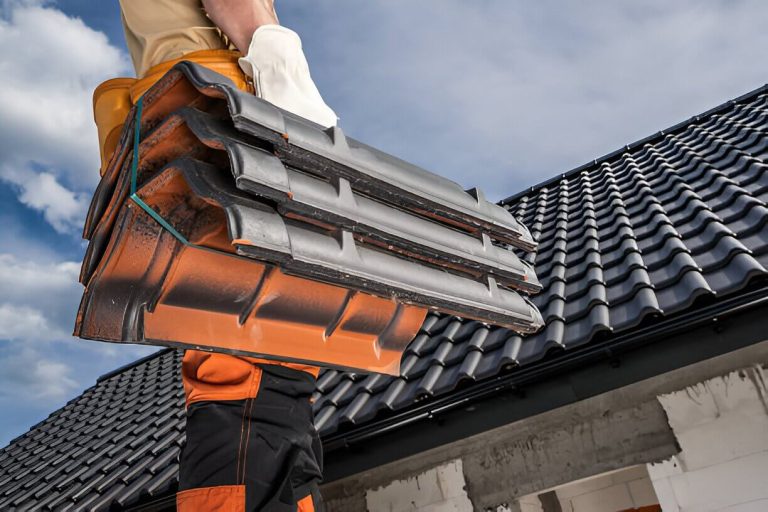
- Replace missing shingles or tiles.
- Seal cracks with roofing sealant.
- Ensure all seams are properly sealed.
For extensive damage, consider consulting our Roof Repair services.
4. Choose the Right Weatherproofing Method
The choice of weatherproofing method depends on your roof type and climate:
- Liquid Rubber Waterproofing: Ideal for flat or low-slope roofs, providing a seamless and flexible layer.
- Bitumen Waterproofing: Suitable for both flat and sloped roofs, offering excellent protection but requiring professional installation.
- Membrane Systems: Durable and long-lasting, particularly for commercial properties.
- Roof Coatings: Best for low-slope roofs, extending the life of your existing roof.
For more information on different roofing materials, visit our Roofing System page.
5. Apply the Weatherproofing Solution
Follow the manufacturer’s instructions for application. Ensure even coverage and well-sealed seams to prevent water infiltration.
6. Maintain Your Weatherproofed Roof
Regular maintenance is key to extending the life of your roof:
- Clean the roof annually to prevent debris buildup.
- Check for signs of wear and apply additional coats as needed.
- Inspect gutters regularly to ensure proper drainage.
For ongoing maintenance tips, explore our Residential Roofing services.
Weatherproofing Your Roof
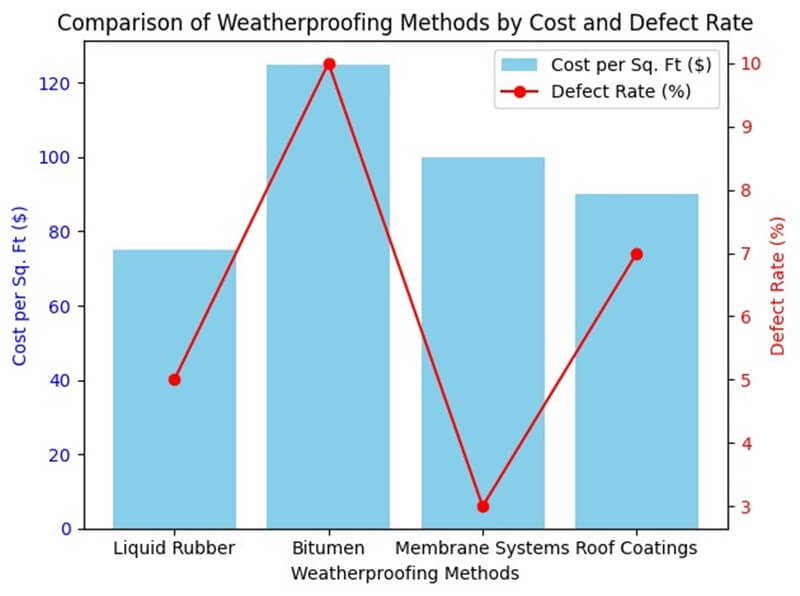
The chart visually compares the cost per square foot and defect rates of various weatherproofing methods. This data highlights the trade-offs between affordability and performance, helping homeowners make informed decisions.
Chart Insights:
- Liquid Rubber: Offers an affordable option at $75 per square foot with a moderate defect rate of 5%.
- Bitumen: The most expensive method ($125/sq. ft.) but has the highest defect rate (10%), making it less ideal for long-term reliability.
- Membrane Systems: Combines durability with low defect rates (3%) at a mid-range cost of $100 per square foot.
- Roof Coatings: Balances cost ($90/sq. ft.) and defect rate (7%), suitable for budget-conscious homeowners seeking decent performance.
This comparison aligns with the blog’s discussion on selecting the right weatherproofing method based on your roof type, budget, and climate conditions.
Signs You Need to Weatherproof Your Roof
If you notice any of the following, it’s time to take action:
- Visible leaks in the attic or ceilings
- Pooling water on the roof
- Cracked, curling, or missing shingles
- Water stains inside the home
- Sagging roof structure
Addressing these issues promptly can save you from costly repairs and ensure your home remains safe and dry.
Conclusion
Weatherproofing your roof is a smart investment that protects your home from water damage and extends its lifespan. By following these steps and maintaining your roof regularly, you can ensure it remains a secure and comfortable haven for years to come. For expert advice or assistance, contact us at Right Now Roofing today.